 You are here:
High-Force Rivet Nut Gun vs Standard High-Force Rivet Nut Gun: How to Choose
What the market calls a "high-force rivet nut gun" actually comes in three generations: manual, pneumatic (semi-automatic) and auto-feed. When buyers ask how an high-force rivet nut gun differs from a standard one and whether the price is justified, they are really asking which generation suits their volume and workstation. This guide compares how the three tools operate, how fast they are, how much labor they need and where each one fits, then shows how to decide.
Bulk buyers usually compare total cost per rivet rather than the machine price alone, because consumables and wear parts dominate that number. The notes below cover high-force rivet nut gun supply and procurement.
For buyers who source machines, rivets and spare parts in one order, the essentials: how the three types of high-force rivet nut guns differ; what makes an high-force rivet nut gun automatic; when it pays to upgrade to the automatic model; selection advice and how to verify it.
1. How the Three Types of High-Force Rivet Nut Guns Differ
| Item | Manual high-force rivet nut gun | Pneumatic semi-automatic | High-Force Rivet Nut Gun |
|---|---|---|---|
| Loading and threading on | Nut placed by hand, threaded by hand | Nut placed by hand, pneumatic pull | Vibratory bowl feeder sorts and feeds the nuts, which thread onto the mandrel automatically |
| Pulling and release | Manual force, all arm power | Pneumatic pull, manual reverse to release | Dual motors thread on, pull and thread off with one button |
| Time per nut | Longest, physically demanding | Moderate | Shortest, stable cycle time |
| Consistency | Depends on operator feel | Good, still affected by the operator | Uniform pull force and stroke, high consistency |
| Labor intensity | High, fatigue comes fast | Medium | Low, one operator can tend several machines or stations |
| Best for | Repair work, small batches, prototypes | High-mix, low-to-medium volume | High volume, dedicated lines, automated production |
2. What Makes an High-Force Rivet Nut Gun Automatic
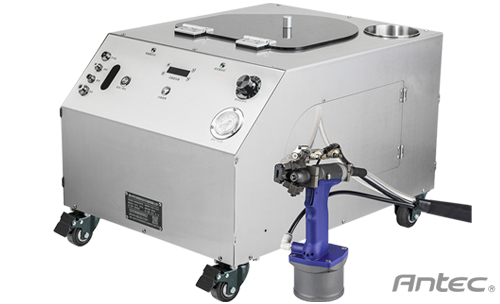
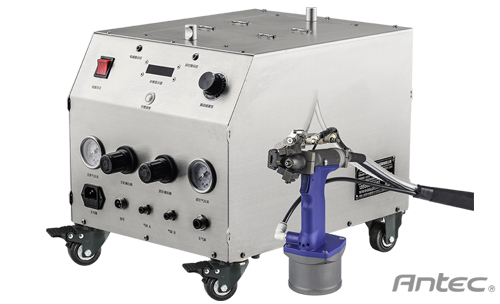
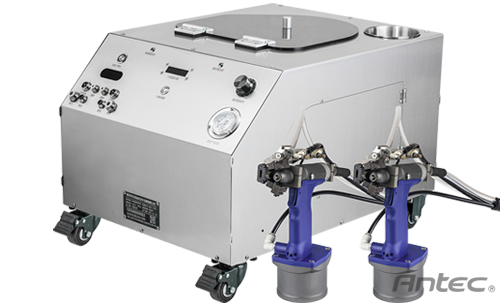
An high-force rivet nut gun has three parts: a feeding unit (a vibratory bowl or magazine that sorts the nuts and blows them along), a feed tube and the gun body. The heart of the design is the dual-motor drive. One motor threads the nut onto the mandrel at the nose; once the pull is complete, a second motor reverses the mandrel to release it. The operator only inserts the nose into the hole and presses the start button, so the whole manual sequence of picking up a nut, lining it up, threading it on and reversing it out disappears. Like an auto-feed riveting gun, it gives the most time-consuming loading and alignment work to the machine, and it can raise efficiency by up to about 3x compared with a traditional hand tool (the exact factor depends on your workpiece; confirm it in a trial).
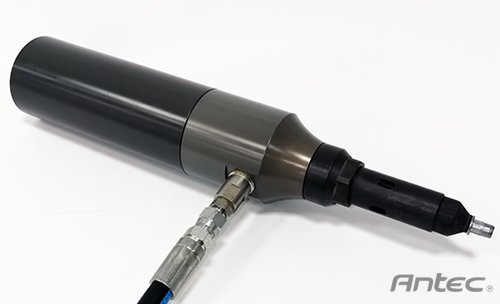
Consumables ordered with the equipment avoid a second shipment later.
3. When It Pays to Upgrade to the Automatic Model
Typical signals: one part carries many rivet nut locations and the operator re-grips the gun all day; hiring gets hard in peak season and manual stations are hard to staff; customers demand thread consistency and torque traceability; monthly consumption of a single nut size is high and cycle time has become the line bottleneck; or you are planning a robotic cell or an automated line. The reverse also holds: with mixed sizes, batches of only a few dozen pieces and scattered hole positions, a pneumatic semi-automatic gun is often the more flexible choice. Judge it by running the full numbers first, putting labor cost, rework, lost cycle time and equipment investment on the same sheet. Many production lines pay back in 2-6 months; the reasoning is set out in why upgrade to custom automated riveting equipment.
4. Selection Advice and How to Verify It
First, fix the nut spec (M3-M12, material, flat or countersunk head, through-hole or blind) and the material thickness. Second, choose manual, pneumatic or automatic according to volume. Third, ask the supplier for a free on-site trial with your own parts and nuts, and measure time per nut, time per part, go/no-go thread pass rate and continuous feeding reliability on the spot. Decide on data, not on the top speed of a sample. The trial process is described in can you try an auto-feed riveting gun for free: on-site trial policy, which applies to high-force rivet nut guns as well. For an upgrade case from the auto parts industry, see riveting in new energy vehicle parts.
Bulk orders are packed together, so the line is not waiting on a partial delivery.
High-Force Rivet Nut Gun Selection FAQ
Supply Q&A
Similar sizes need only a change of mandrel, anvil and feed channel. A wide size spread calls for multiple channels or several machines, so give the supplier your full size list during selection.
Yes. Keep them on high-mix, low-volume stations and put the automatic units on the lines with the most locations and the tightest cycle time. The two types work well side by side.
No. A hand-held auto-feed gun already delivers a large productivity gain. A robotic cell is the next step for high volumes at fixed positions; see types of auto-feed riveting guns.
Yes. The supplier can bring manual, pneumatic and automatic options for an on-site sample run and a side-by-side comparison, or you can book a visit to the Huizhou manufacturing base.
High-Force Rivet Nut Gun at a glance: 20,000 N pull force, 70 rivets per minute, bulk orders shipped worldwide, one-stop supply of machines, rivets and parts.
Send the annual rivet consumption and the equipment list - the team will quote the whole package in one offer.
One supplier for the whole riveting process
Tell us what you buy today and in what volume. We will consolidate the machines, the consumables and the parts into one offer.
5. How to Calculate Payback Without Fooling Yourself
Do not judge the automatic model on unit price alone. Build a four-part annual total. Labor: auto-feed removes the pickup, threading and reverse-out motions, and one machine usually absorbs the repetitive share of about three dedicated riveting workers. Defects: the thread stripping, missed nuts and uneven bulging that a hand-held gun produces drop sharply on automated equipment. Cycle time: time per nut is stable, so dedicated-line capacity can be scheduled backwards from takt time. Management: recruiting, training and staff turnover costs fall with it. Add the four and a typical high-volume line returns the investment in 2-6 months. Start with the product that has the most locations, prove it on one month of real data, then roll it out to the other stations; for an industry case see automation gains in sheet metal and stainless steel fabrication.
A hand-held auto-feed gun goes into service after delivery and training, with almost no change to the line. Fixed or robotic cells need fixtures and joint debugging, scheduled by part complexity; plan the switchover around holidays or in stages so shipments are not affected.
Further reading: high-force rivet nut gun uses, working principle and common questions · types of rivet nuts: a comparison · high-force rivet nut gun
 Previous