 You are here:
Automatic Riveting Equipment: How to Choose a Manufacturer - Procurement
Automatic riveting equipment is not an off-the-shelf product. Workpieces, rivet specs and station layout vary from plant to plant, so proposals vary just as much. The supplier market is equally mixed, and a wrong pick costs you either a machine that misses cycle time and jams constantly, or one that ends up standing idle. This guide starts with the industry landscape, then gives you a selection method you can actually run and a checklist for validating the machine on trial.
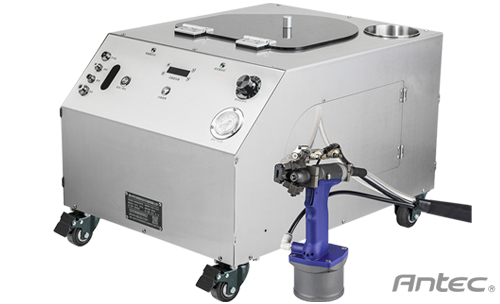
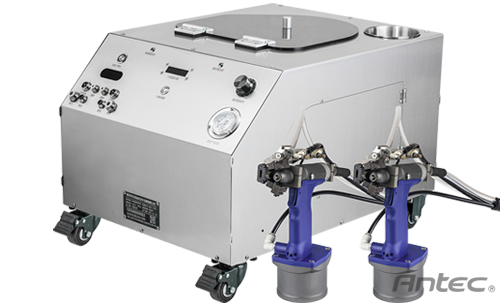
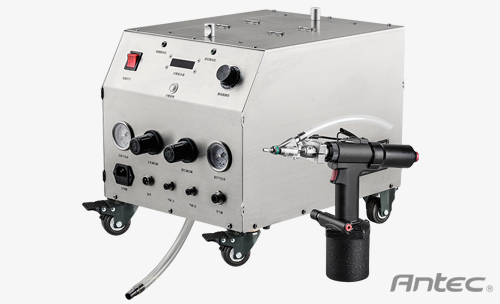
One order covers the equipment and the consumables, so the line does not stop waiting for a second shipment. The notes below cover auto-feed riveting gun supply and procurement.
For buyers who source machines, rivets and spare parts in one order, the essentials: three types of supplier on the market; six checks when selecting automatic riveting equipment; five things a machine trial must prove; working out the payback period.
1. Three Types of Supplier on the Market
| Supplier Type | What It Looks Like | Risk |
|---|---|---|
| Specialist riveting equipment maker | In-house feed mechanism and nosepiece design, deep industry case history, customization, a spare-parts system | You still have to verify that the cases and the in-house capability are real |
| General automation integrator | Strong on full-line and robot integration | May buy in the riveting process and core feed parts, and the service chain is long |
| Trader / private-label seller | Low price, fast delivery | Core parts of unknown origin, no real customization or after-sales cover |
2. Six Checks When Selecting Automatic Riveting Equipment
Industry cases first: has the supplier built this kind of machine for this kind of workpiece in your industry? Ask to see a line running or a video of one. Second, core components: are the feed mechanism, nosepiece and mandrel designed and made in house? That determines jam rate and parts supply. Third, customization: can the supplier build fixtures, a dedicated machine, a dual-gun setup or a robotic cell around your workpiece? Fourth, the trial mechanism: will they bring a machine to your plant and run your real workpieces? A supplier who will not run a trial usually has a reason. Fifth, service and spare parts: on-site service capability, wear-part lead time, warranty terms. Sixth, track record: years in business, patents and customer count are all worth checking. Antec has focused on automatic riveting for 16 years, served 1,200+ enterprises and delivered 3,296+ solutions. For the essentials see how to choose an auto-feed riveting gun manufacturer.
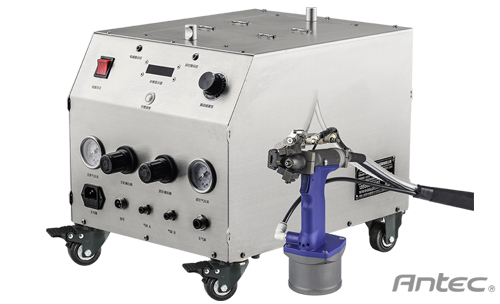
A single supplier shortens the approval cycle for both the machine and the consumables.
3. Five Things a Machine Trial Must Prove
A trial is not watching the supplier fire a few standard rivets. It is running your own workpieces with your own rivets, continuously, and proving five things. (1) Real cycle time: seconds per rivet and minutes per part, then capacity calculated backward from your annual volume. (2) Continuous stability: a long run that exposes the jam rate, with Antec equipment validated to 30,000 consecutive rivets without a jam and an overall failure rate of about 0.3%. (3) Forming quality: consistent bulbing and mandrel break, no missing or proud rivets, no press marks on visible surfaces. (4) Changeover: swap a spec on the spot and time it. (5) Operator difficulty: put your own operator on the machine and judge the training cost. For trial policy and process see whether you can trial an auto-feed riveting gun for free.
4. Working Out the Payback Period
Put four numbers on one sheet: the headcount at that station today and the fully loaded annual labor cost; the equipment investment, including fixtures, installation and training; the people you keep after automation; and the fall in rework, scrap and missed-rivet service calls. Assume one machine replaces the repetitive work of about three operators and raises efficiency by up to about 3 times: dedicated high-volume lines commonly pay back in 2-6 months, while high-mix low-volume work has to be discounted for how universal the machine really is. Make the supplier run the numbers on your data, in front of you. Do not accept a verbal "pays back in a few months". For the full purchasing checklist see what to check before you buy an auto-feed riveting gun, and for what drives price see how much an auto-feed riveting gun costs.
Price per rivet, not price per machine, is the number that survives the first year.
5. Common Traps
Trap one: comparing unit price only and ignoring jam rate and service, so the cheap machine is idle within three months. Trap two: using a demo speed as your line cycle time, when the demo rivet is not your rivet. Trap three: ordering without a trial. Trap four: core parts bought in from outside, so one failure means half a month of downtime waiting for a spare. Trap five: no training and no inspection routine, which ruins even a good machine (for upkeep see this guide to operation and maintenance). Trap six: slow service response and no on-site capability.
Selection FAQ
Buyer Questions
No, but there should be service capability near you. Antec builds its machines in Huizhou and provides on-site trials and repair service to customers worldwide.
Antec offers a free on-site trial. Send your specs and you will have a proposal and a price range in about 10 minutes; once you confirm, we bring the machine to your plant and run your samples.
One-year warranty on the whole machine, 7-day return and 15-day exchange for quality issues that are not user-caused, and wear parts supplied at cost. Put these terms in the contract together with a wear-part price list and a global response-time commitment, so you are not negotiating from weakness later.
Yes. Send the workpiece CAD model, rivet specs, cycle time and floor space and we can assess it. For the options see handheld, fixed, dual-gun and robotic cells compared.
Standard models ship quickly; custom dedicated machines are scheduled by complexity. For lead times and after-sales arrangements see how long it takes to build a custom auto-feed riveting gun.
Auto-Feed Riveting Gun at a glance: 20,000 N pull force, 70 rivets per minute, bulk orders shipped worldwide, one-stop supply of machines, rivets and parts.
Consumables and wear parts are quoted alongside the machine, so the total cost per rivet is visible before the order.
Machines, rivets and parts in one order
Send the equipment list and the annual rivet consumption. We will quote the package, the bulk price and the shipping in one reply.
Further reading: purchasing checklist (16 questions) · on-site trial policy and process · how to choose an auto-feed riveting gun manufacturer
 Previous
 This is the last article